
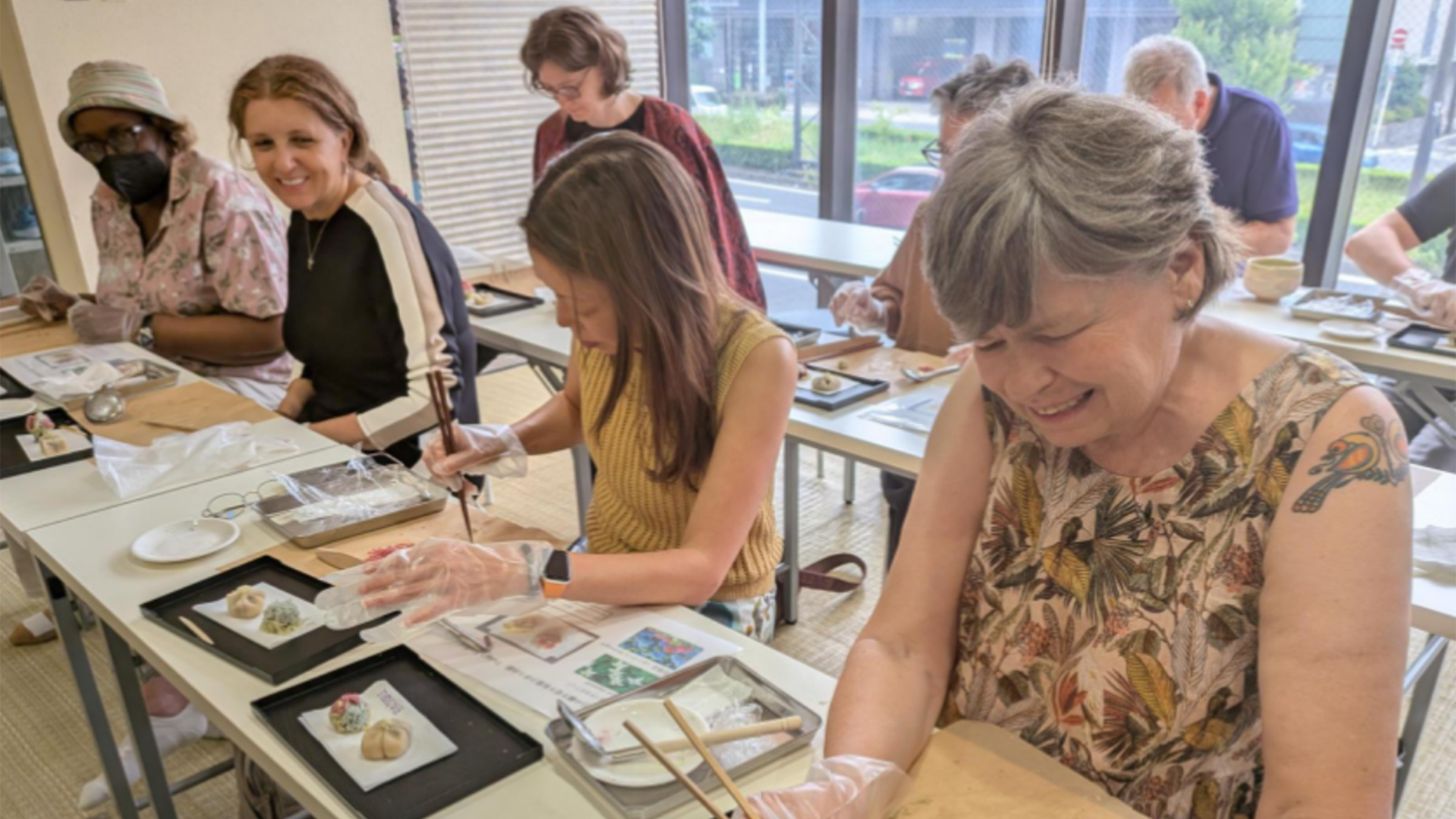
As part of their cultural immersion in Kyoto, Adult Study Abroad participants try their hand at making traditional Japanese wagashi sweets.
Temple University, Japan Campus (TUJ) has successfully completed its first four-week Adult Study Abroad program in Kyoto, welcoming 30 participants from May 11 to June 4.
The program’s popularity exceeded expectations even before it began. When applications opened in November 2025, interest poured in from around the world and the program quickly filled with a robust waiting list.
Participants ranged in age from their 20s to their 70s, though many were retirees finally finding the time to pursue a long-held dream. Most traveled from across the United States, bringing with them a wide range of professional backgrounds, including law, healthcare, higher education, finance, and caregiving. Several couples joined together, while two participants balanced the program with remote work responsibilities back home.
What connected them all was a deep curiosity about Japan.
One participant shared that she first encountered Zen literature as a teenager and read The Tale of Genji as a university student in her twenties.
“I always wanted to come to Japan,” she said. “Life was busy, and I never had the chance. Now, in my sixties, I finally do.”
Throughout the four-week program, participants explored Japanese culture through literature, visual arts, Zen Buddhism, and samurai cinema. Their enthusiasm was evident from the very first day.

During a class discussion on Akutagawa Ryunosuke’s Rashomon, participants eagerly debated themes, symbolism, and historical context. When journalists visited the classroom, several participants approached them in Japanese, language skills they had started studying long before arriving in Kyoto. The program also challenged participants to create original artistic works inspired by the Japanese concept of mono no aware, or the awareness of impermanence. Some arrived with professional creative experience, while others had never produced artwork before. Yet all embraced the challenge, discovering new ways to express their understanding of Japanese aesthetics.
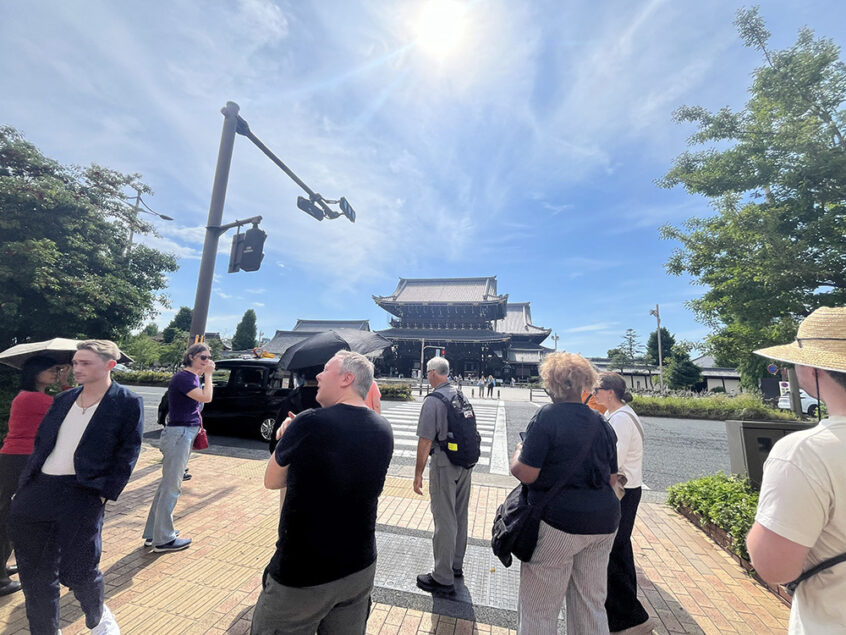
Outside the classroom, participants visited Zen temples, spoke directly with Buddhist monks, and explored Kyoto’s rich cultural heritage. They also examined the global influence of Japanese storytelling, tracing connections from samurai films and Kabuki theater to modern works such as Star Wars.
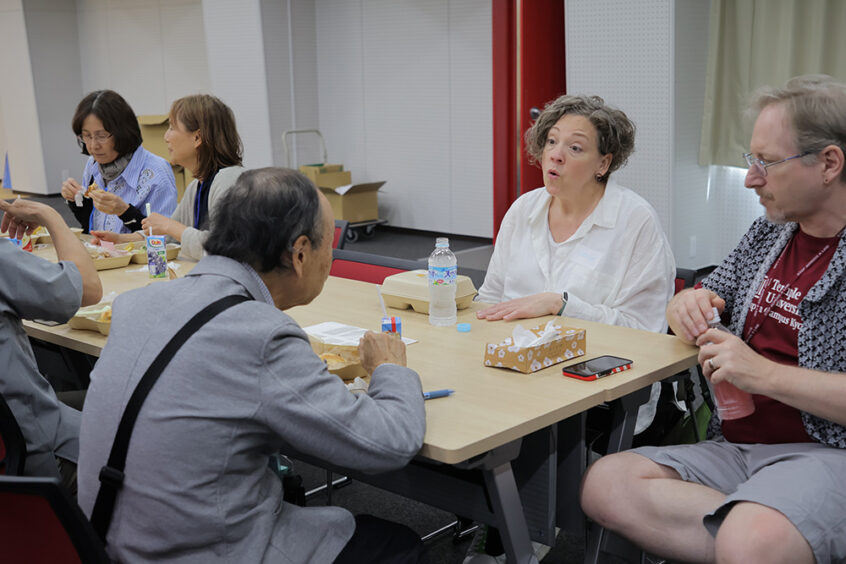
One of the highlights of the final week was a cultural exchange event with 32 members of Yomiuri Shimbun’s Waizu Club from Kansai region. Participants spent lunchtime discussing their experiences, sharing perspectives on Japan and life in Kyoto, and forming connections that extended beyond language and cultural differences.
As the program came to an end, many participants described the four weeks as passing far too quickly.
Several said they had fallen even more deeply in love with Japan and hoped to return for future programs. Rather than immediately flying home, many extended their stay—traveling to Tokyo, taking cruises around Japan, or inviting family members to join them in Kyoto.
The success of the Kyoto program has already inspired expansion. Due to overwhelming demand, TUJ had launch its first Adult Study Abroad program in Tokyo on June 15, creating new opportunities for lifelong learners seeking a deeper understanding of Japan through immersive academic and cultural experiences.

Other related stories
- Temple University Japan Further Expands Academic Offerings with Launch of Cybersecurity Major and Data Science Certificate in Fall 2026 (June 11, 2026)
- Temple University Japan Expands Full Degree Opportunities in Kyoto for Fall 2026 (May 25, 2026)
- TUJ Kyoto Gears Up After One-Year Anniversary with New Curriculum, TEDx and Facility Expansion (April 23, 2026)