
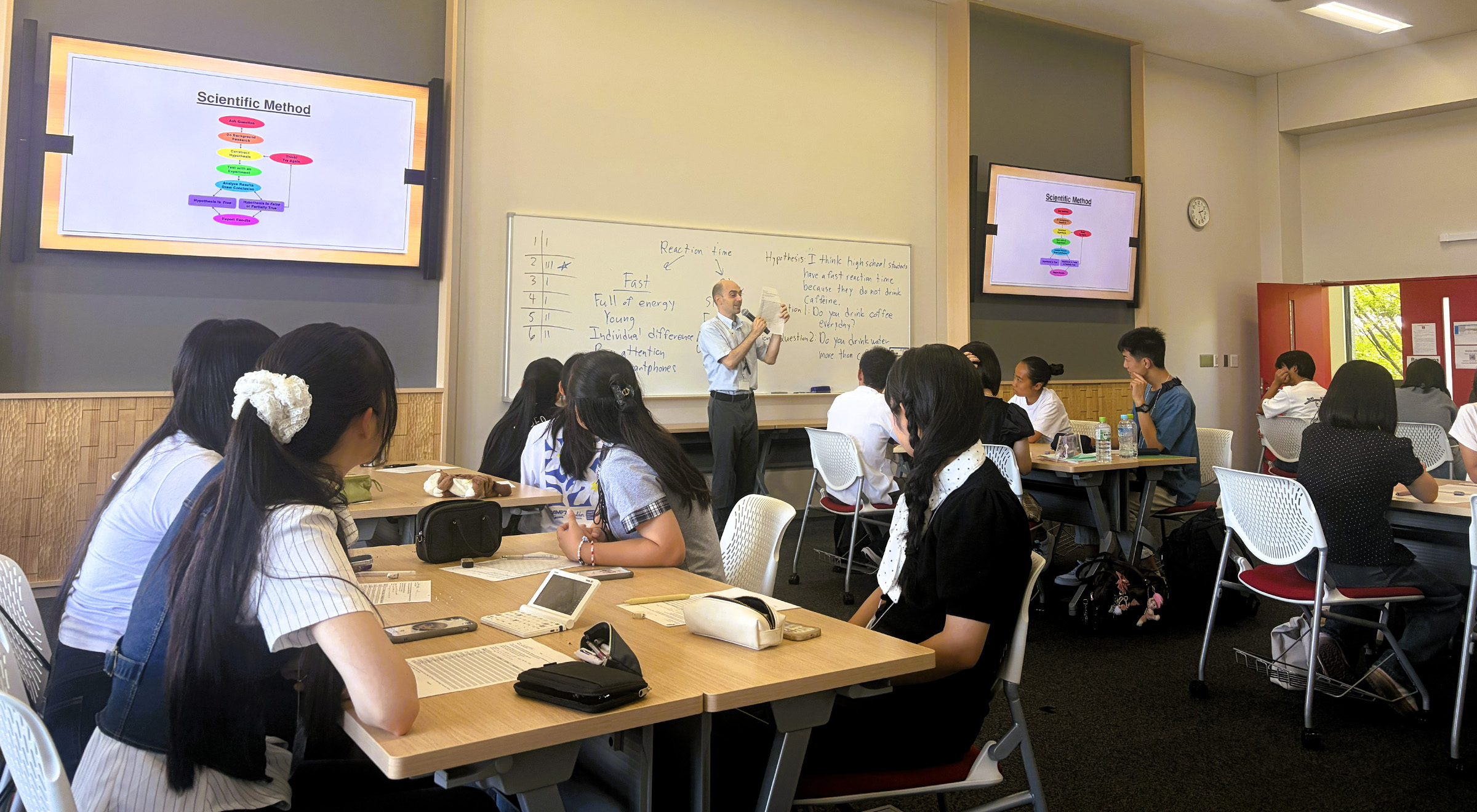
High school students from Nagasaki and Ehime explore the scientific method in an English-only classroom at TUJ Kyoto
Summer brings a different kind of energy to Temple University Japan (TUJ). More than 1,400 students, from elementary school through college, participate in summer intensive programs offered by TUJ’s Academic English Program (AEP) across Tokyo and Kyoto.
The programs reflect an important part of TUJ’s role in Japan: working with schools, boards of education and local governments to expand English and international learning opportunities for young people.
In August 2026, nearly 50 high school students from Nagasaki and Ehime prefectures came to TUJ Kyoto for a four-day program developed with their respective boards of education. The program grew out of TUJ’s comprehensive partnership agreements with the two prefectures to create new educational opportunities for young people in their communities.
Learning English by Learning in English
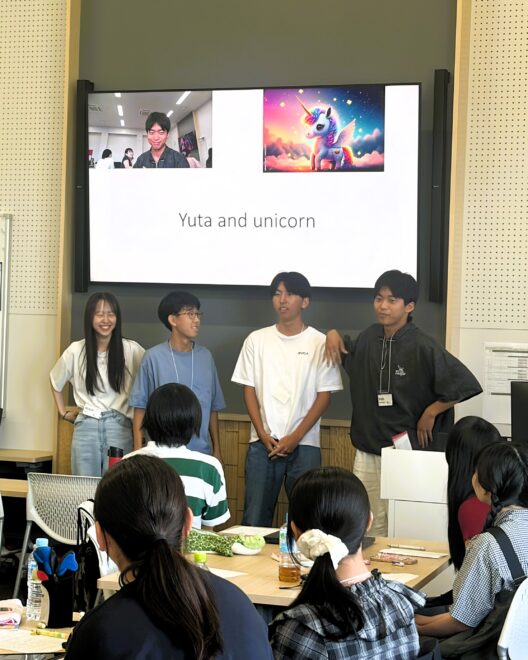
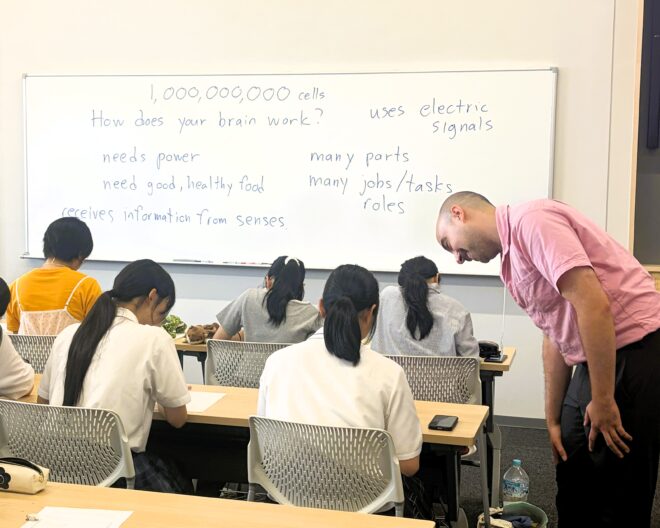
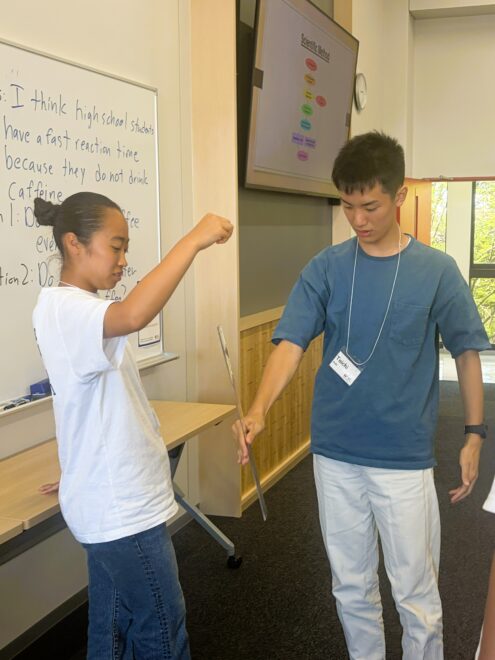
AEP goes beyond simply studying English. Guided by experienced instructors with professional backgrounds in TESOL and English language education, students use English to explore ideas, communicate with others and learn from different perspectives. Over four days, the students explored topics including science, economics and critical thinking through group work, discussion and problem-solving. Students from different schools, grade levels and English backgrounds worked together, with groups changing throughout the program to create more opportunities to communicate with new people.
The approach gives younger learners an opportunity to experience the kind of interactive, student-centered learning they might encounter in an American university classroom.
Connecting Temple Across Campuses and Classrooms
This summer, AEP’s professional teaching team was joined by Dr. Jill May Swavely and four graduate students from Temple University’s TESOL program in Philadelphia. They spent approximately three weeks at TUJ Kyoto, supporting AEP students while gaining hands-on experience in a different educational and cultural setting.
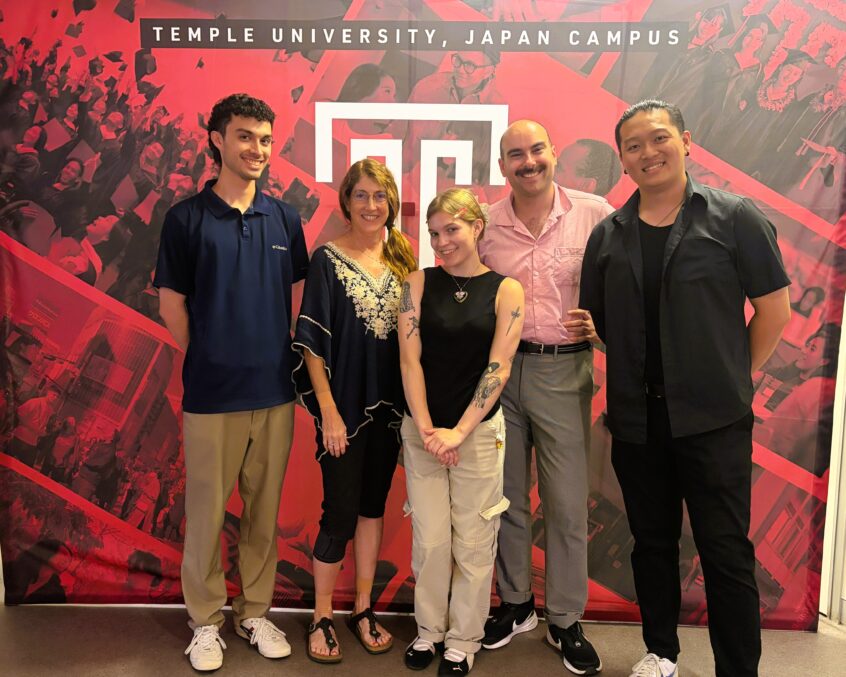
The graduate students brought perspectives from different educational backgrounds. Joshua Corrales first studied at TUJ as an undergraduate in 2014 and later taught high school students in Hokkaido through the Japan Exchange and Teaching (JET) Programme. Joe Courtney teaches ESL in Philadelphia, Leo Li previously taught high school students in Taiwan, and Cameron Coleman came to TESOL through her work with international students at Temple. TUJ Kyoto undergraduates also participated after receiving training as teaching assistants, supporting group work and communication in the classroom.
For the Temple graduate students, working with Japanese students also offered a different perspective on English language education. Swavely explained that ESL educators in the United States often work with immigrants, refugees and other learners who need English for everyday life. In Japan, students typically learn English as a foreign language, creating a different context for both teaching and learning. Swavely noted that this was the first time graduate students from Temple’s TESOL program in Philadelphia had participated in this kind of practicum at TUJ.
“Watching our graduate students engage with Japanese students, learn from them and make their own discoveries was incredibly meaningful,” she said. “It was an important experience for Temple as well.”
Opening New Possibilities
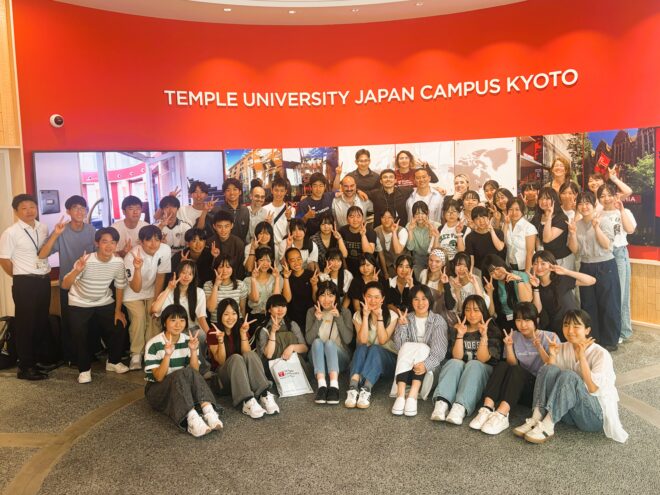
By the final day, students who had arrived as strangers were exchanging ideas and building new connections. Some talked about wanting to study more English, attend university in the United States or even study at Temple.
Through programs like AEP and partnerships with schools, boards of education and local governments, TUJ creates opportunities for young people to learn, connect and explore what comes next. Eligible high school students from Nagasaki and Ehime can also apply for the TUJ Partnership Scholarship (Japanese), which provides 50% tuition support for their first two semesters at TUJ. That connection can extend beyond graduation. Nearly 70% of TUJ’s international undergraduate students stay in Japan after graduation to work or continue their studies, extending their connection with Japan beyond their time at Temple.
Other related stories
- Experience the World in Japan – 80 Osaka Prefectural High School Students Join International Discussions at TUJ Kyoto (August 19, 2026)
- Temple University Japan Expands Full Degree Opportunities in Kyoto for Fall 2026 (May 25, 2026)
- TUJ’s English Teacher Training Program Highlighted at Regular Session of Osaka Prefectural Assembly Session (June 25, 2026)